
Lunar water ice, explained
Where the Moon's ice is, how we know it's there, and the one unknown that decides whether it's worth mining.
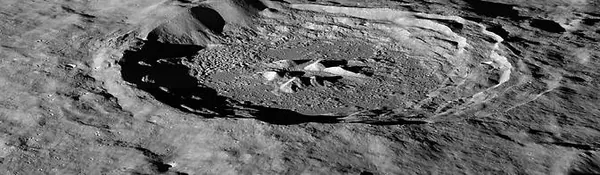
The Moon’s most valuable resource is frozen water sitting in craters that haven’t seen sunlight in a very long time. Water is drinking water, radiation shielding and, once split, rocket propellant, which makes it the one lunar commodity with an obvious buyer.
The Moon’s spin axis is barely tilted, so some craters near the poles never get direct sun. Their floors are among the coldest places measured in the solar system, cold enough to trap water molecules more or less indefinitely. Planners call them permanently shadowed regions, and nearly every polar base concept is drawn next to one.
The evidence has built up in stages. In 2009 NASA’s LCROSS crashed a spent rocket stage into a shadowed crater near the south pole and detected water in the debris plume. In 2018, Li and colleagues in PNAS used data from India’s Chandrayaan-1 orbiter to report direct evidence of water ice exposed at the surface in the polar regions.
What we still don’t know is the part that decides whether anyone gets rich: how concentrated the ice is, how it’s mixed into the soil, and how deep it goes. Ice spread thinly through regolith is a different engineering problem from thick buried layers. That’s why instrument projects like NASA’s VIPER rover and ESA’s PROSPECT drill-and-lab package are built around measuring ice in place rather than from orbit.
The operating conditions are brutal. It’s dark, so there’s no solar power on the crater floor. The temperatures make metals brittle and freeze lubricants. Line-of-sight radio to Earth is often blocked by the crater walls. None of that is impossible, but all of it costs money.
We think lunar ice ends up as a propellant business first and a water business second. The best news would be rich, shallow deposits, which would make cislunar refueling look real. Thin, patchy ice would push the business case back by years, and we’d say so.
Not affiliated with NASA, SpaceX or any agency or company mentioned. Not investment advice. Disclaimer.